
Shared Hosting vs. VPS Hosting: Which Is Better for Your Website?
Choosing a hosting plan can feel confusing, especially when providers offer several different options with unfamiliar technical terms. Two of the most common choices are shared hosting and VPS hosting.
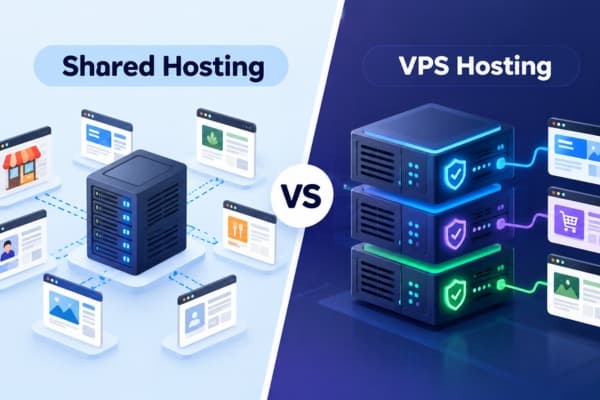
Both can make your website accessible online, but they work differently behind the scenes. Shared hosting places multiple websites on the same server and distributes resources among them, while VPS hosting creates separate virtual environments with allocated resources.
The better option depends on your website’s traffic, technical needs, budget, and how much control you want over your hosting environment.
What Is Shared Hosting?
Shared hosting is a hosting model where many websites are stored on the same physical server.
Each website uses a portion of the server’s resources, including processing power, memory, and storage. Because these resources are shared, hosting providers can offer shared plans at relatively low prices.
This makes shared hosting a common starting point for new websites, personal blogs, portfolios, and small businesses.
Most shared hosting plans are also managed by the provider. The hosting company handles server maintenance, updates, and much of the technical infrastructure, which can make the service easier for beginners.
The tradeoff is that users typically have less control over the server environment and fewer dedicated resources.
What Is VPS Hosting?
VPS stands for Virtual Private Server.
With VPS hosting, several customers may still use the same physical server, but virtualization technology separates that server into individual environments.
Each VPS receives its own allocated resources, such as RAM, storage, and processing capacity.
This creates a hosting environment that behaves more like a private server, even though the underlying physical hardware is shared.
VPS hosting usually gives users more control than shared hosting and can support websites that need additional resources, custom configurations, or more consistent performance.
Depending on the provider, VPS plans may be fully managed, partially managed, or unmanaged.
Shared Hosting vs. VPS Hosting: The Main Difference
The biggest difference comes down to how server resources are distributed.
With shared hosting, websites compete for resources from the same server pool. A sudden traffic spike or resource-heavy website on the server can sometimes affect other accounts.
With VPS hosting, resources are allocated to individual virtual environments. This can provide more predictable performance because your website has a defined amount of server capacity available.
A simple way to think about it is:
- Shared hosting: Multiple websites share one general pool of resources.
- VPS hosting: Multiple users share physical hardware, but each has a more isolated virtual environment.
That difference influences cost, performance, scalability, and technical control.
Performance
Performance is one of the main reasons website owners consider moving from shared hosting to VPS hosting.
Shared Hosting Performance
Shared hosting can provide enough performance for smaller websites with moderate traffic.
However, because server resources are shared, performance may be less predictable during periods of heavy usage.
Providers often use management tools and resource limits to prevent one account from consuming too much capacity, but there are still more restrictions compared with a VPS.
For a basic business website, personal blog, or small portfolio, this may not be a major concern.
VPS Hosting Performance
VPS hosting generally provides more consistent access to processing power and memory.
Because resources are allocated to your virtual server, your website is less dependent on the activity of other accounts.
This can be useful for:
- Growing websites
- Larger content sites
- Busy business websites
- Online stores
- Applications with higher resource requirements
A VPS is not automatically faster in every situation, because performance also depends on server configuration, website optimization, software, and available resources. However, it typically provides more capacity and flexibility than entry-level shared hosting.
Cost
Cost is one of the clearest differences between the two options.
Shared hosting is usually less expensive because many customers use the same server and infrastructure.
That makes it attractive for new websites or businesses that want to keep initial costs low.
VPS hosting costs more because customers receive dedicated virtual resources and greater control.
Pricing can also vary considerably within each category.
For example, a premium shared hosting plan may cost more than an entry-level VPS, while a high-resource managed VPS can be significantly more expensive.
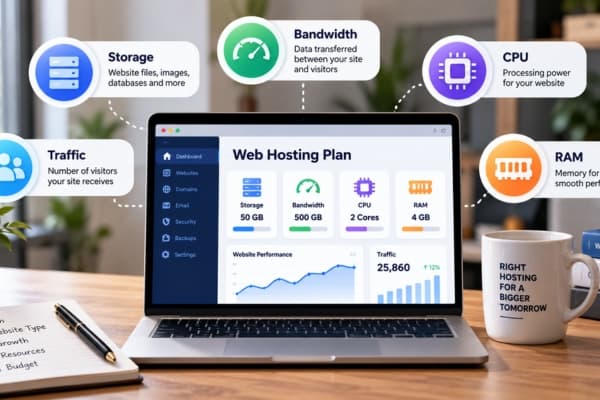
When comparing plans, look beyond the introductory rate. Check:
- Renewal pricing
- Storage limits
- Bandwidth or traffic allowances
- Backup costs
- Security tools
- Email hosting
- Support level
- Management fees
The cheapest plan is not always the lowest-cost option over the long term.
Ease of Use
Shared hosting is generally easier for beginners.
Providers often include a control panel that lets users manage files, email, databases, domains, and website applications without needing to work directly with server commands.
Many shared hosting plans also support one-click installation for popular content management systems.
VPS hosting can be more complex.
An unmanaged VPS may require knowledge of:
- Server administration
- Software installation
- Security configuration
- Updates
- Command-line tools
- Firewall management
Managed VPS hosting reduces much of this technical burden because the provider takes responsibility for more server-management tasks.
If you want the benefits of VPS hosting but do not have technical experience, a managed VPS may be easier to maintain.
Control and Customization
Shared hosting usually offers limited server-level control.
Because multiple customers use the same server, providers need to maintain a standardized environment. Users typically cannot change major server configurations or install software that affects the entire system.
VPS hosting gives users more flexibility.
Depending on the plan, you may be able to:
- Choose server software
- Adjust configurations
- Install custom applications
- Set resource limits
- Manage firewalls
- Use root or administrative access
This level of customization can be valuable for developers and businesses running applications with specific technical requirements.
For a straightforward website, however, additional control may not be necessary.
Security
Both shared and VPS hosting can offer strong security when properly managed.
Shared hosting providers usually handle much of the server-level security, including system updates, monitoring, and account isolation.
However, because multiple users share the same physical environment, the hosting provider’s security practices are especially important.
VPS hosting provides greater separation between individual hosting environments.
This can reduce some risks associated with shared resources, while also giving customers more control over security settings.
The tradeoff is responsibility.
With an unmanaged VPS, the customer may be responsible for applying updates, configuring the firewall, monitoring software, and responding to security issues.
A poorly maintained VPS can still be vulnerable even though it provides more isolation.
Scalability
Scalability refers to how easily a hosting plan can adapt as your website grows.
Shared hosting works well for smaller websites but usually has clearer resource limits.
As traffic, storage, or application requirements increase, users may need to upgrade to a higher shared plan or move to a different hosting type.
VPS hosting usually provides more room to scale.
Providers may allow users to increase RAM, storage, CPU capacity, or other resources without moving to an entirely different platform.
This can make VPS hosting attractive for businesses that expect steady growth.
However, you do not necessarily need to start with a VPS just because you expect your website to grow. Beginning with shared hosting and upgrading later can be a practical strategy if migration tools and upgrade paths are available.
When Shared Hosting May Be the Better Choice
Shared hosting may make sense if:
- You are launching your first website
- Your traffic is currently low or moderate
- Your website has basic resource requirements
- You want an affordable hosting option
- You prefer the provider to manage technical maintenance
- You do not need custom server configurations
For many small businesses, blogs, portfolios, and informational websites, shared hosting can provide everything needed during the early stages.
When VPS Hosting May Be the Better Choice
VPS hosting may be more appropriate if:
- Your website has outgrown shared hosting
- You receive higher or unpredictable traffic
- You need additional server resources
- You run custom applications
- You need greater control over the hosting environment
- You want a more scalable setup
Online stores, membership websites, web applications, and expanding content platforms may benefit from the additional flexibility of a VPS.
Should You Start With Shared Hosting and Upgrade Later?
For many website owners, yes.
Starting with shared hosting can keep initial costs and technical complexity lower.
As the site grows, signs that it may be time to consider a VPS include:
- Frequent resource-limit warnings
- Noticeably slower performance during busy periods
- Increased website traffic
- More demanding applications
- Need for custom server software
- Greater security or configuration requirements
Before upgrading, check whether performance problems are actually caused by hosting. Poorly optimized images, plugins, code, or database issues can also slow a website.
Bottom Line
Shared hosting and VPS hosting can both be reliable options, but they are designed for different stages and types of websites.
Shared hosting is generally more affordable and easier to manage, making it a practical choice for new websites and smaller businesses with modest resource requirements.
VPS hosting provides greater resource allocation, flexibility, control, and scalability. It may be better suited to growing websites, online stores, and applications that need more consistent performance or custom configurations.
The right choice depends on what your website needs today and how those needs are likely to change. Instead of automatically choosing the more powerful option, compare your expected traffic, technical requirements, budget, and available upgrade paths. A hosting plan that fits your current workload while providing a clear path to scale can offer better long-term value.